
Moved by: Rohin Vadera
Seconder:
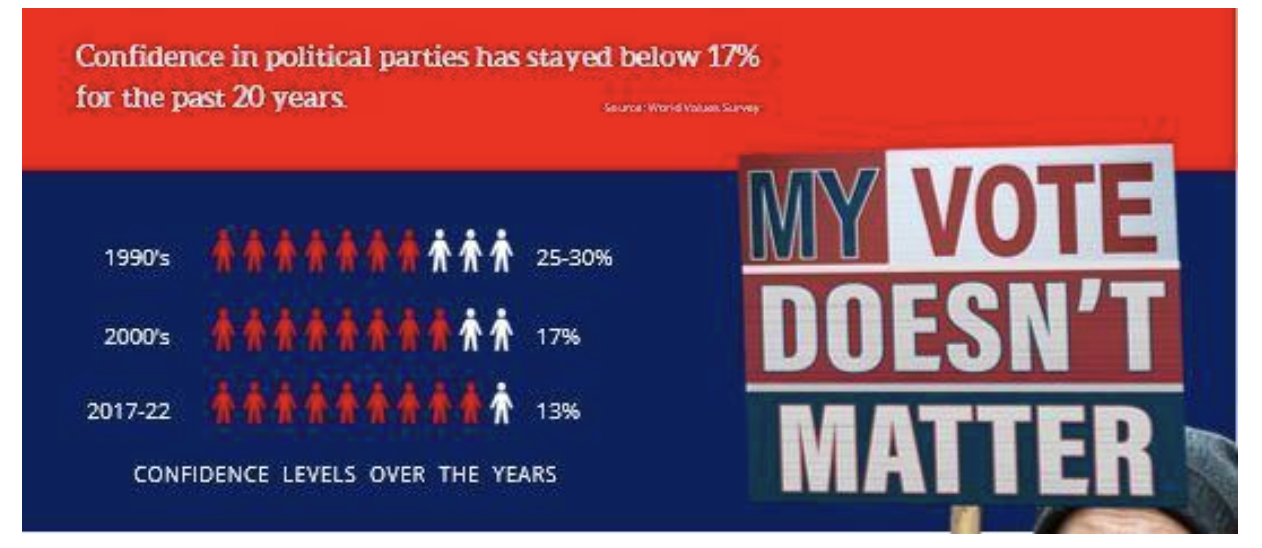
The AGM notes with concern that electoral systems do not safeguard the principle that elected politicians or governments must have majority consent to be elected.
Unlock Democracy believes :
In empowering individuals and communities to have a greater say over the decisions that affect them.
In ensuring the democratic accountability of all elected representatives, governments, and public bodies.
That the absence of a mechanism for majority consent undermines the principles outlined above.
Unlock Democracy regrets that people are not guaranteed adequate representation and are forced to:
Cast a hopeless or uncertain ballot.
Vote for the "least bad" option.
Vote tactically to keep the worst candidate out of power.
Abstain from voting altogether.
Spoil a ballot, which will not count and is simply lumped in with those spoilt in error.
Unlock Democracy calls for withholding consent to be embedded into the electoral process, ensuring that any government that takes power has done so with true majority consent.
Unlock Democracy believes this can be achieved by including the option, at the top of all ballots for legislative positions, of "I VETO this election."
Unlock Democracy notes that in First Past the Post elections, this would require elections to be re-run until a majority of electors haven’t exercised their veto, and in proportional voting systems, seats equivalent to the level of support for the veto would remain unfilled.
APPENDIX 1: How does the veto option work?
This option is suitable for all electoral systems. Its effect is logically determined by the system within which it operates.
In First-Past-The-Post (FPTP): If a majority votes to veto, it triggers reruns—as many times as necessary—until a majority does not veto. If a majority do not veto, it is a de facto ranked ballot. Its effect starts to influence governance as soon as the veto pool is greater than the winning margin; the winner will have to govern to win over the veto pool or risk losing the next election.
In Proportional Representation (PR): The principle is that it will lead to empty seats. The veto option can be used in the D'Hondt method just like any other party vote. The number of seats the veto "wins" will remain empty for the duration of the parliament. This ensures PR does not assign those seats to MPs who bring no additional representation to the legislature.
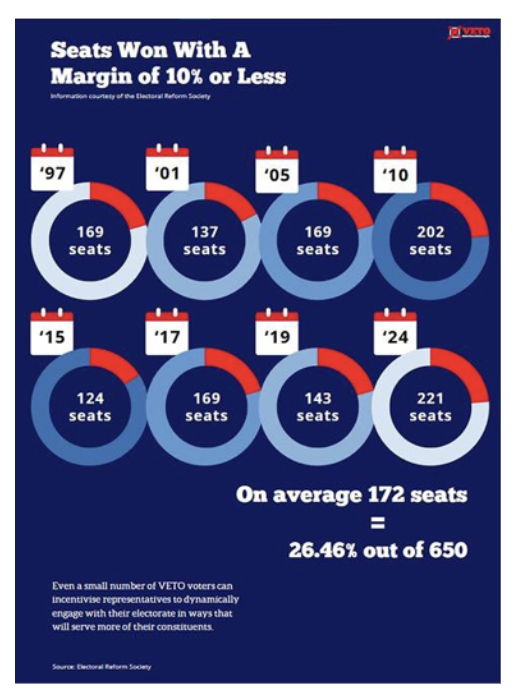
Under this PR mechanism, the only way for parties to increase their number of seats is to represent more voters. Elected MPs will be acutely cognisant that failing to serve voters will mean even more seats become empty. If less than a majority of seats are filled in an election, the entire election must be rerun. This ensures that parliament remains strictly focused on serving voters.
Note: I’m sure this motion raises plenty of questions, but this is the time to deal with the principle at stake; the practical detail of legislation is the second step, once the principle of majority consent as a necessity is accepted.
APPENDIX 2: Why is it so important?
This is the only method by which we can reliably maximise the common good.
Further benefits of a majority consent system include:
Reduced Influence of Special Interest Money: The only reason special interest money has such an influence is that it supports policies benefiting a minority. When majority consent is always required, grassroots money supporting policies that benefit the majority will be the only money that carries influence.
Diminished Returns on Misinformation: The tactical benefits of misinformation and negative campaigning will decrease significantly. Like special interest money, these tactics only exist because a minority benefits from them. Because misinformation hinders the ability to serve a true majority, politicians will instead seek clear, objective information to avoid making their jobs harder.
Neutralising Negative Campaigning: Negative campaigning will only serve to increase the number of vetoes, completely defeating the traditional goal of depressing voter turnout.
Results Over Ideology: Ideological considerations will become secondary to delivering measurable results for the public.
Reorganising the Political Establishment: Currently, we live in an upside-down world where voters must mould themselves around what political parties choose to offer them. This design is illogical and consistently leads to subpar outcomes for voters. Mandatory majority consent forces the establishment to reorganize itself entirely around optimizing voter service.