Annual Report 2026
Highlights
We’ve seen some important wins, and plenty of hard-won progress this year. With the support of our members and supporters, we have:
Secured the independence of the Electoral Commission. We’ve been fighting for this since the Electoral Commission had its independence taken away in 2022. Now, the Representation of the People Bill looks set to fix what was broken.
Won votes for 16 and 17 year olds. This is a change we and our allies have argued for over many years, and the largest expansion of the franchise in half a century.
Brought Automatic Voter Registration (AVR) closer than ever. The Representation of the People Bill contains the foundations of AVR: provision for registration without application, and for pilot schemes. The report Towards Automatic Voter Registration: Lessons from Canada and Australia, launched with a parliamentary roundtable, gave MPs and Peers the evidence for how it can be done here.
Become joint secretariat of the APPG for Fair Elections. In January, alongside Make Votes Matter, we took on the secretariat of the largest cross-party group in Parliament. This puts us at the centre of the parliamentary coalition for electoral reform and campaigns to get big money and hidden influence out of politics, and to tackle misinformation and disinformation. The APPG supplies MPs and Peers with the evidence and arguments they need.
Helped bring nearly 200 parliamentarians behind a National Commission on Electoral Reform. Members from across the spectrum, including more than a quarter of all Labour MPs, have now backed the amendment calling for a National Commission to chart a path away from First Past the Post. The idea is closer to reality than it has ever been.
Taken the case for defensive constitutional reform to a national audience. Our joint report, with the 99% Organisation, on how to stop the UK following the United States down an authoritarian path was picked up in the Financial Times, and its quick-read version, Democracy on the Brink, was launched in Parliament with Clive Lewis MP.
Campaigns
This was another year of high energy campaigning. The Representation of the People Bill was our main focus this year, but we were also heavily involved in work around the English Devolution Bill, the work of the Commons Modernisation Committee, the APPG for Fair Elections, and the fight for a Written Constitution

The Representation of the People Bill: Turning something good into something great
Throughout the autumn and winter of 2025, we were waiting for an important piece of democracy legislation to arrive in parliament. Rumours were swirling about when the Bill would arrive, and what it would contain, but nothing was certain. We set to work building the evidence base, briefing parliamentarians, and working with allies across civil society to make sure this Bill included important changes like:
Restoring the Independence of the Electoral Commission. We organised a cross-party group of over 40 MPs to write to the Prime Minister, voicing collective concerns that our elections watchdog remained under government control.
Introduce a system of Automatic Voter Registration so that no voter is blocked from voting on election day. With the help of our supporters, we got 34 MPs to attend our drop-in session in parliament and pledge their support.
Getting big money out of our politics for good, with a cap on donations. We responded to the spectre of Elon Musk fanning the flames of political violence on the streets of London with a clear call to limit the hold a few billionaires can hold on our politics.
A commitment to launching a National Commission on Electoral Reform, which would chart a path on fixing our broken voting system. We’ve been coordinating with our allies across the sector to bring this closer to reality than it’s ever been.
That preparation paid off. The Representation of the People Bill arrived in the House of Commons in February 2026, and contained real wins for causes we have campaigned on for years:
Votes for 16 and 17 year olds
Big steps towards Automatic Voter Registration (AVR), including provision for registration without application and for AVR pilots
A donation cap for overseas donors, which prevents foreign donors from buying their way into our politics. A step in the right direction when it comes to getting big money out of our politics.
Stronger protections for candidates and campaigners facing harassment and intimidation
Then, in March, we secured another big win. When it was published, the government had chosen not to restore the independence of the Electoral Commission, leaving ministers with the power to set the regulator's Strategy and Policy Statement. We had called out this glaring omission from the start, and within weeks the government reversed its position. The Electoral Commission will have its independence restored.
The Representation of the People Bill in its current form undoes a great deal of the damage done to our democracy in recent years. But we know that it could go much, much further. We need a Bill that doesn't just repair what was broken, but instead leaves our democracy stronger than it has ever been. Since the Bill’s publication we have been coordinating allies in Parliament to table amendments on:
A cap on ALL political donations, so that no rich individual or company can buy an oversized influence on our politics.
A National Commission on Electoral Reform, to recommend a voting system in which every vote counts
A published timetable for implementing Automatic Voter Registration. Without this, votes at 16 becomes a meaningless change because so many young people won’t be registered to vote.
A better postal vote system for British citizens living abroad, whose ballot papers usually arrive too late to be counted
With the help of our supporters, we have:
Sent 7,324 letters and postcards to MPs. The replies we received prove that when we write en masse like this, it’s impossible to ignore us.
Gathered 37964 petition signatures (and counting) calling for key amendments to the Bill.
Coordinated 194 MPs to back 7 amendments
Briefed 509 MPs ahead of the Bill’s second reading
Submitted written evidence to the Public Bill Committee on automatic voter registration, donation caps and Electoral Commission independence, and joined eighteen other democracy organisations in a joint civil society submission, offering Parliament ready-drafted amendment text
The Representation of the People Bill returned to parliament in autumn 2026. We’ll be redoubling our efforts to win the changes it so badly needs.
Is Proportional Representation closer to reality than ever?
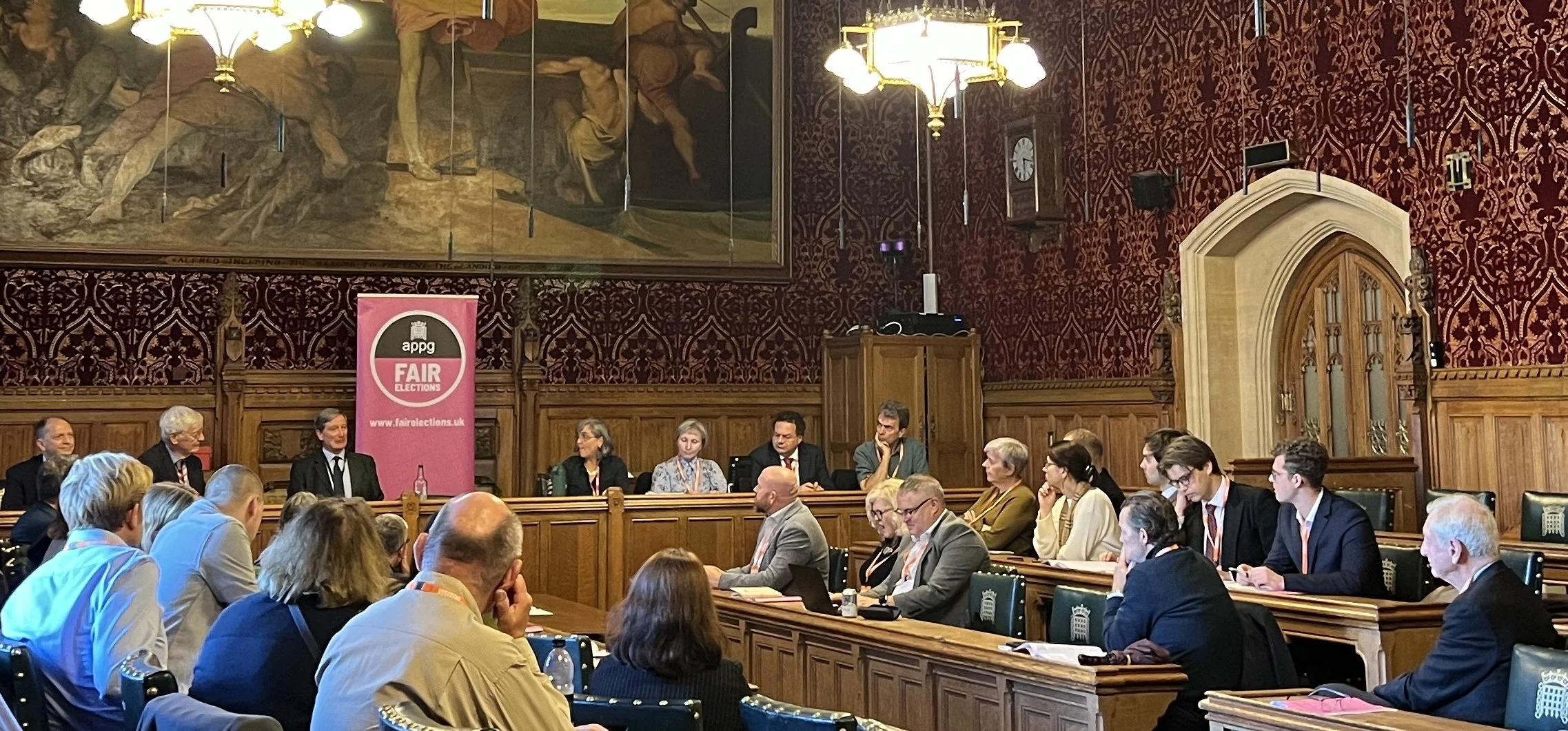
A panel discussion hosted by the APPG for Fair Elections
The fight for fair votes has taken big steps forward this year.
The most significant came from the government itself. In legislating to replace First Past the Post for mayoral elections in England, ministers accepted in practice what we have argued for years: that a system which hands power to candidates supported by only a small minority of voters cannot command public confidence. Having conceded the principle for mayors, the government now needs to apply it to Westminster elections.
In December, we teamed up with our friends at Make Votes Matter, Compass, and the Electoral Reform Society to write to the Democracy Minister at the time, Samantha Dixon MP, asking her to take action on PR. We had the opportunity to meet the Minister in-person and a productive conversation about the need for reform.
In January, Unlock Democracy became joint secretariat of the All-Party Parliamentary Group for Fair Elections, alongside Make Votes Matter. The APPG is the largest cross-party group in Parliament, and its central ask is for the Prime Minister to launch a National Commission on Electoral Reform. Taking on the secretariat puts us at the centre of that parliamentary coalition. We’re well placed to support MPs with the evidence and the talking points they need to be strong advocates for PR.
That coalition has grown quickly. Nearly 200 parliamentarians from across every party, including more than a quarter of all Labour MPs, have now backed the amendment to the Representation of the People Bill calling for a National Commission.
As of July, the United Kingdom also has a Prime Minister who openly supports proportional representation for Westminster, and wants an independent commission to examine the voting system, and who has spoken about putting PR in Labour's next manifesto.
That is an opportunity that we can’t afford to miss. The PM may be on our side, but the rest of the government is lagging behind and so our focus now shifts to building the consensus within the government as a whole. We need the National Commission to start soon, and getting it started is our challenge for the year ahead.
Important Concessions on the English Devolution and Community Empowerment Act
The English Devolution and Community Empowerment Bill made its way through parliament this year, and eventually became law in April 2026. When the Bill was published, there were big concerns about the way the Bill in its original form continued to centralise power with the creation of large Strategic Authorities. And so we set about trying to win changes.
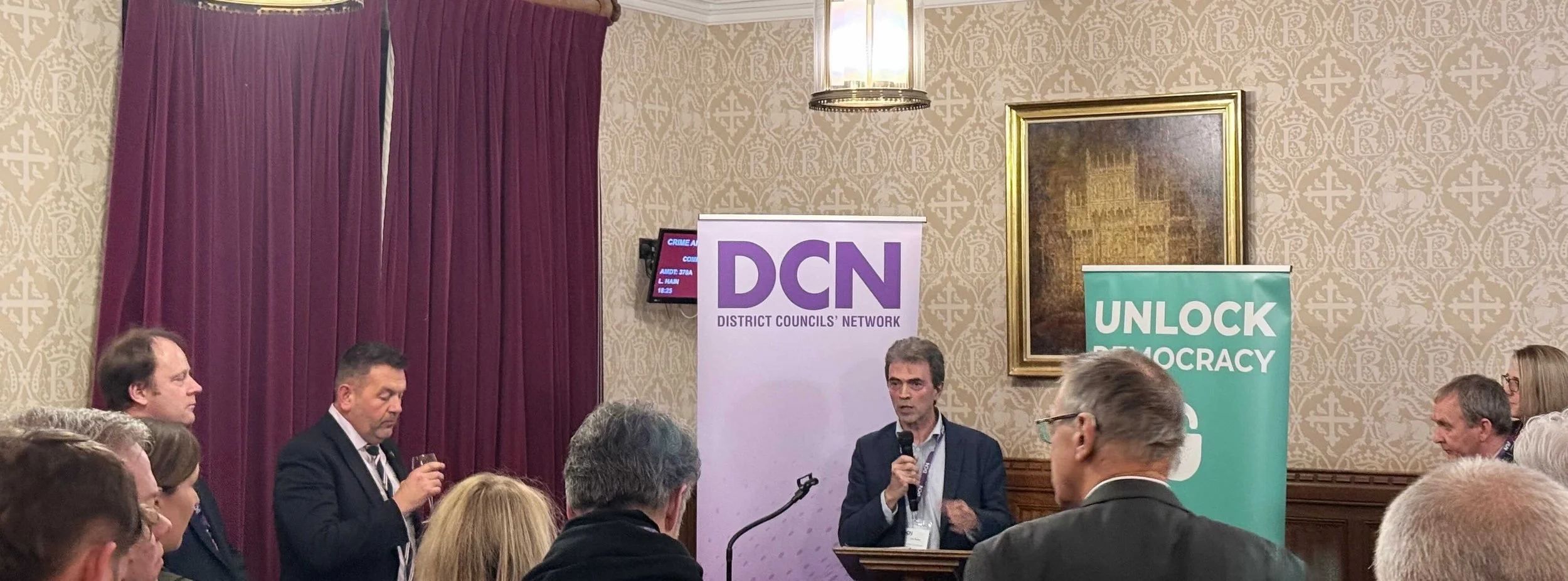
CEO Tom Brake speaks at an event in parliament, joint hosted by the District Councils’ Network
We decided to ask Councillors ourselves what they thought about the changes. We found that a majority of Councillors in England who responded had strong concerns about the proposed reorganisation of local government in their area. We used these findings to publicly refute the government’s suggestion that their plans were popular with Councillors.
We also worked closely with the District Councils’ Network to help push back against these top-down reforms and propose better solutions to the devolution puzzle in England.
House of Lords: A small win for democracy, but much more must be done
The Hereditary Peers Bill is now law. This means that, at long last, inherited power will not be guaranteed a place in our parliament.
We’ve been working hard this year to make sure that the government’s ambitions for reform don’t stop here, though. The Labour manifesto promised to start a public consultation on the future of the Second Chamber, and we have been taking every opportunity to remind them of that fact.
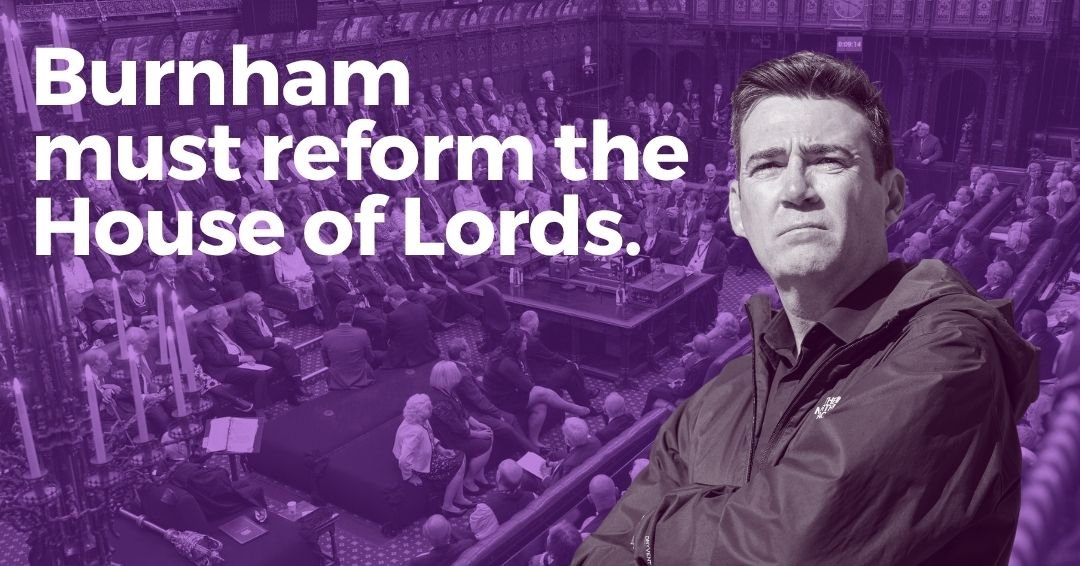
We have been helping with the investigative work of journalists at a number of national titles looking into the deeply embedded levels of sleaze and cronyism that pollute our parliament through the Lords. We also worked with 38 Degrees to promote a petition calling for Life Peers who commit serious breaches of Lords rules to be banned permanently from the House of Lords.
Major interventions on the state of the UK Constitution
Securing a written constitution for the UK is one of Unlock Democracy's founding missions. This year, we celebrated two big interventions from party leaders on that topic.
In March, Sir Ed Davey made a "new Magna Carta" the centrepiece of his keynote speech to Liberal Democrat spring conference: a written constitution to entrench rights that are currently held on trust: the rule of law, universal human rights, trial by jury, freedom of expression and a free press. Then in July, within weeks of entering Downing Street, Andy Burnham became the first serving Prime Minister in modern times to argue publicly for a codified constitution.
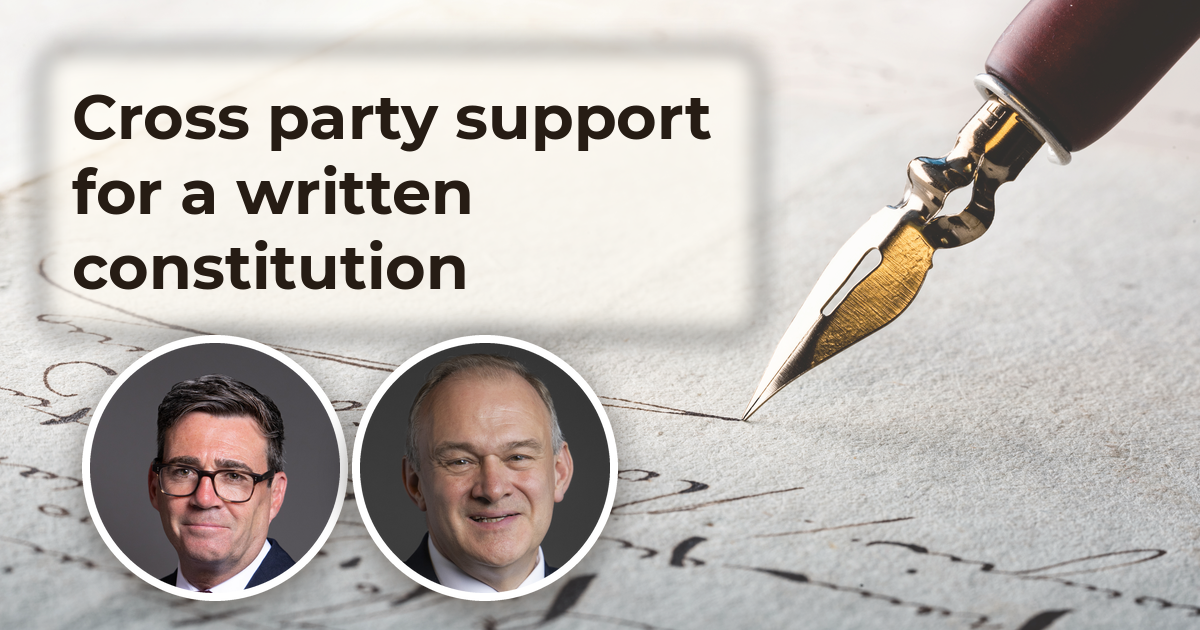
This brings the debate about our constitution into new and genuinely exciting territory. We’ve been thinking a lot about how a written constitution can be a safeguard against authoritarian governments (see Research and Reports) this year, so these calls for a written constitution come at a vital moment. We will work with the government and any party calling for a written constitution.
When will the government act on MPs’ Second Jobs?
Being an MP is a full-time job, but some MPs receive huge salaries from outside employment at the same time. While most MPs are 100% dedicated to representing their constituents, the actions of a few undermine trust in the whole House.
The Government continues to drag its feet when it comes to cracking down on MPs Second Jobs, but we’re not giving up. The Commons Modernisation Committee, set up in 2024, had named tackling Second Jobs as one of its founding priorities. In October 2025, seeing no progress, we wrote to the Committee pressing for action.
In December we launched a petition calling for something more fundamental than a ban: a proper job description for Members of Parliament, and minimum standards that every MP is expected to meet.
Then, in April 2026 we wrote directly to the Chair of the Committee on Standards, whose inquiry into outside employment had by then been open for fifteen months without reporting. We asked for a timetable. We were told the matter would be discussed at the committee's next meeting.
Progress is dreadfully slow, we are not pretending otherwise. But the argument is moving our way: the government has already accepted the principle, MPs are raising it in the Chamber, and the case for action is gaining momentum. We will keep chipping away until we have won a settlement that makes lucrative side jobs for MPs a thing of the past.
Research and Reports
We published a major report this year that received significant press attention. It played a key role in strengthening our campaigns, and provided valuable briefing material that we shared with MPs and Peers to help inform their work.
Defensive Constitutional Reform: Preventing the UK from going the way of the US
We are increasingly concerned at the global tendency to retreat from democracy.
Countries like Turkey, Hungary under Orban, India and now America are all less democratic today than they were just a few years ago. Looking at the impact of President Trump's Project 2025, we fear for America's future. And America is a country with an established written constitution specifically designed to prevent tyranny.
That makes the question: how do we stop something similar from happening in the UK? vitally important.
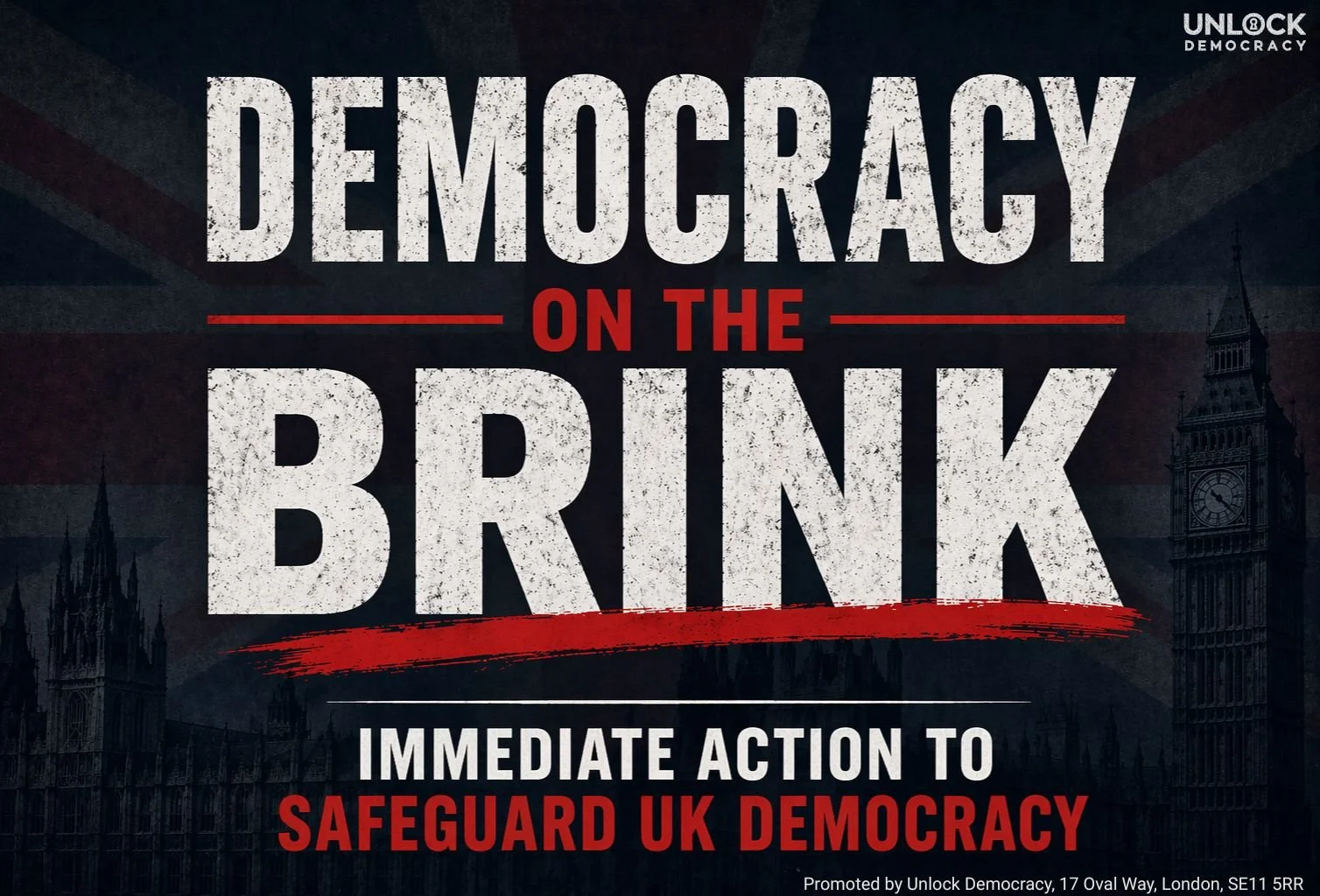
Our joint report with the 99% Organisation on defensive constitutional reform aims to answer this question. The report was picked up by Martin Wolf in The Financial Times, which brought our message to a wider audience.
A shorter version of the report was published under the name Democracy on the Brink. This quick-read version is perfect for busy MPs, so we held a parliamentary launch event with Clive Lewis MP to help spread the word.
Towards Automatic Voter Registration: Lessons from Canada and Australia
We helped to promote an important report from the University of East Anglia, which amplified the strong evidence base on Automatic Voter Registration. This report, commissioned by the UK Democracy Fund, looks at two countries where AVR has been implemented successfully, and demonstrates how we can implement it here in the UK.
The report was launched with a roundtable discussion in parliament, and we invited experts from Canada and Australia to brief MPs and Peers on how to get AVR implemented quickly.
Events

It’s been another year of varied and interesting events hosted by Unlock Democracy.
We’ve enjoyed:
Talking to Dawn Butler MP about what inspired her to enter politics, the challenges she’s faced, and the key moments that have shaped her career.
Hearing from Baroness Hale about her excellent book “With the Law on Our Side: How the Law Works for Everyone and How We Can Make It Better”.
Learning about the Trump Action Tracker project, run by Prof Christina Pagel. This website tracks Trump administration actions that echo authoritarian regimes and may pose a threat to American democracy, and is a fascinating and useful resource
Partnering with Kensington & Chelsea Libraries to deliver a series of events on how our democracy works, and how individual citizens can use their voice within it.
Teaming up with the People’s Powerhouse for a Double BIll of webinars which traced the democratic process from grassroots all the way through to Westminster
All our events are also available on our YouTube channel to watch again.
New Council elected
This year, we held elections for our governing Council. Our Council is responsible for setting Unlock Democracy’s overall strategy, meaning members can steer the direction of the organisation.
The Council members elected to sit from 2026 - 2028 are
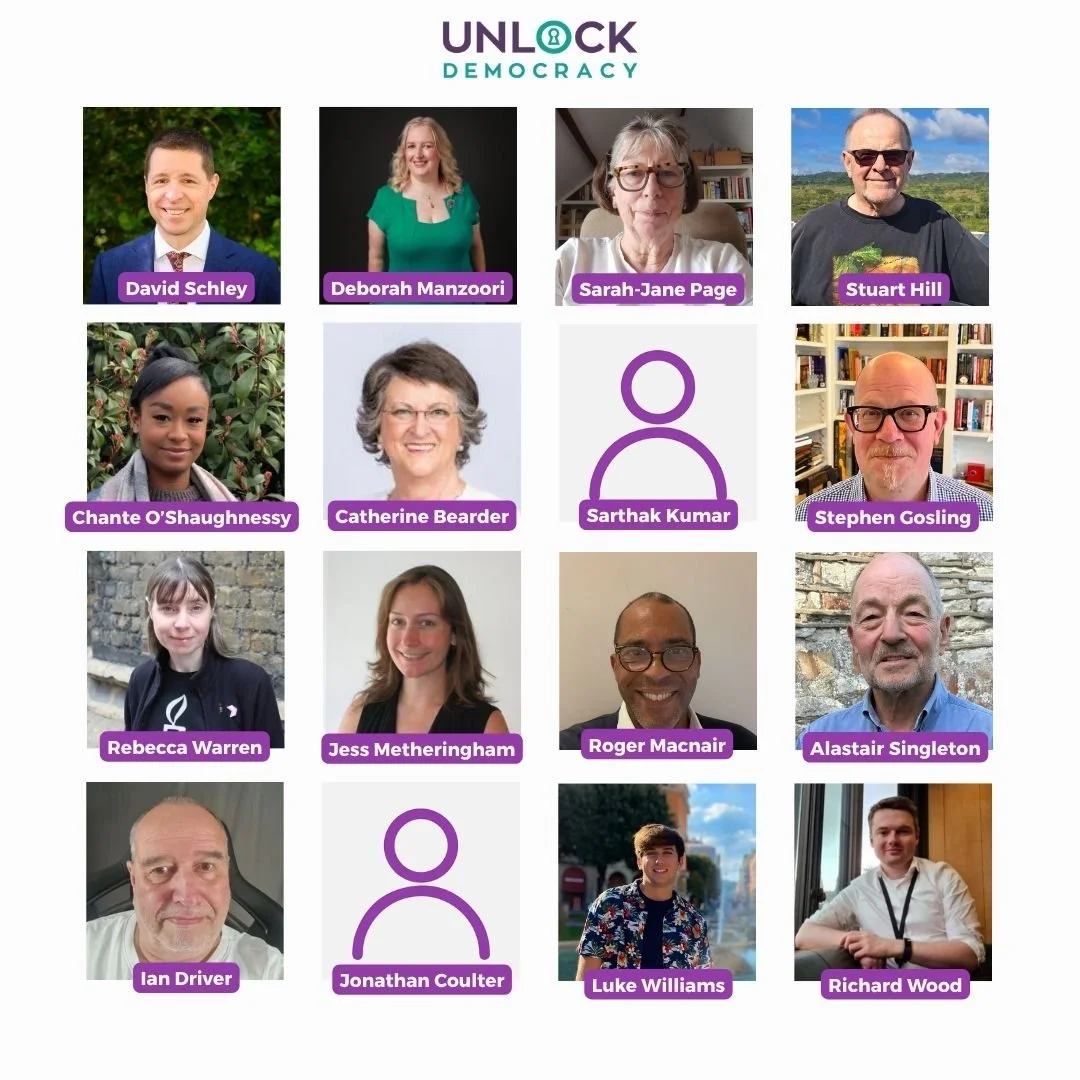
As representatives of our members, the Council plays a really important role in ensuring that we are a democratic and accountable organisation. We want you to take the step of standing for council and contributing your knowledge and experience to build a stronger, more powerful campaign.
Work Experience and Volunteers
Alongside the regular staff team, our work is supported by a number of volunteers and work experience students from all over the country (and the world).
This year, we’ve been delighted to host 12 placements. They’ve all made valuable contributions, and we wish them the best of luck in their future careers.
Press

Our work continued to hit the headlines this year, and we were proud to be featured in titles from across the political spectrum.
We were a dominant voice calling for the Independence of the Electoral Commission to be restored. Our work was featured in The Guardian, Politico, and on the BBC’s Today in Parliament.
When we raised the alarm over cancelled local elections, both The Telegraph and The Times published our analysis of how this would impact the Government’s plans for local government reorganisation.
FT columnist Martin Wolf shone a spotlight on our joint report Defensive Constitutional Reform: Preventing the UK from going the way of the US, written in collaboration with the 99% Organisation.
Our contributions to the Ethics & Integrity Commission’s report on lobbying were picked up by an interview on BBC Radio 4’s Today in Parliament.
We also provided expert insights on Automatic Voter Registration and Votes at 16 for iNews.
We also made regular appearances on LBC, Times Radio, GB News, and Talk TV and were approached for comment by newspapers of all political persuasions, from The Observer to The Daily Mail.
Finance Report
We are enormously grateful to everyone who has contributed financially to Unlock Democracy.
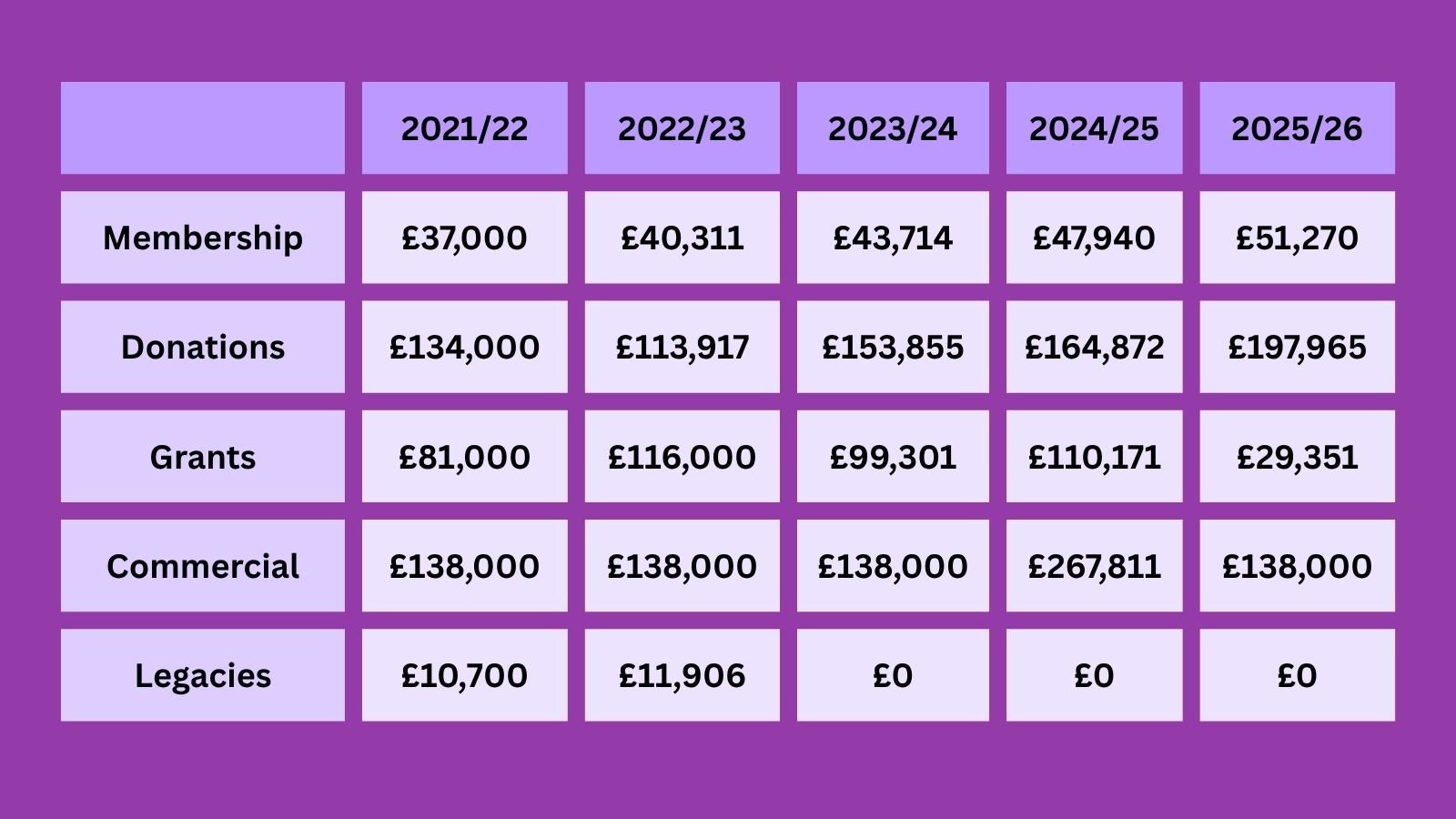
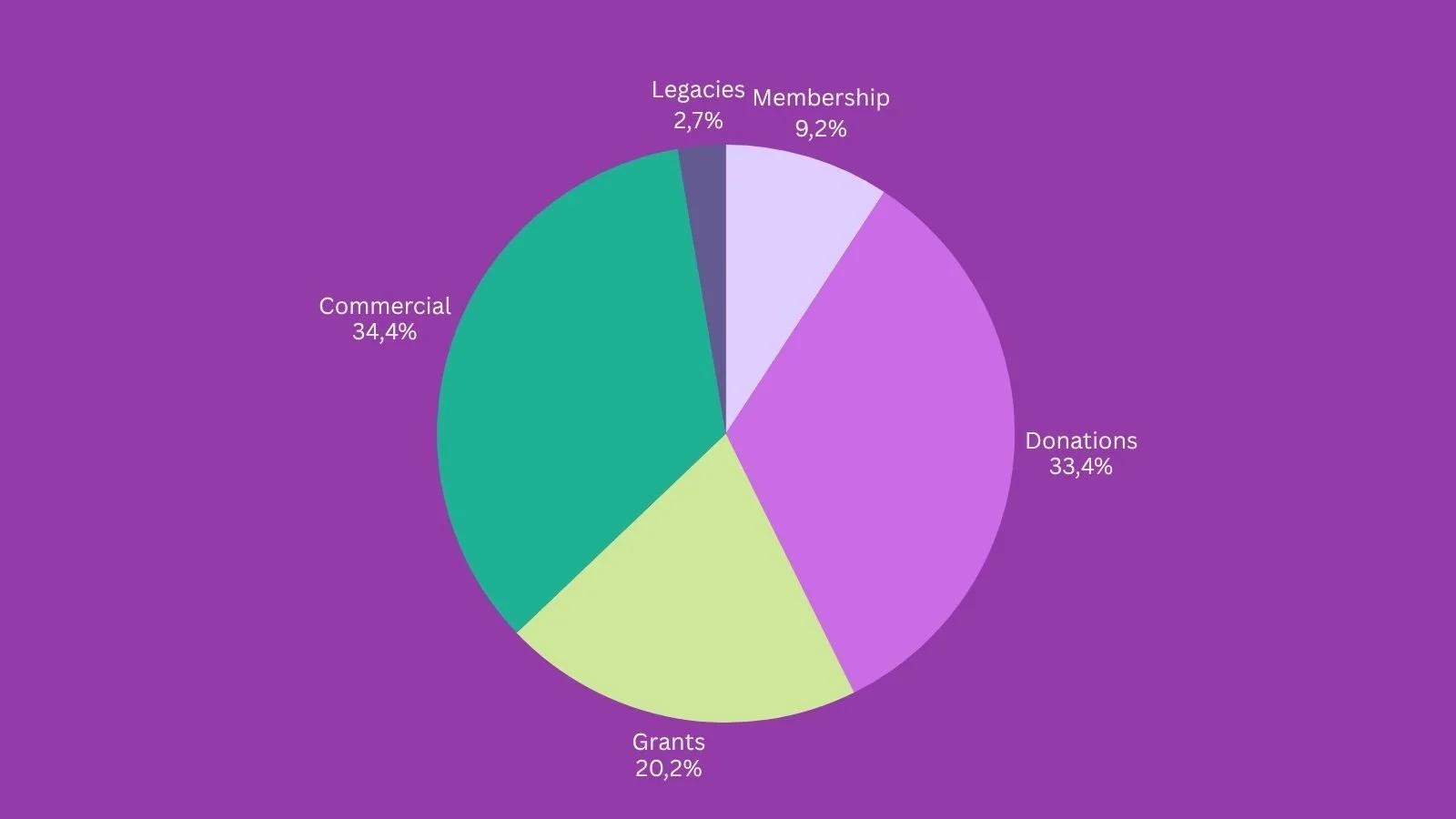
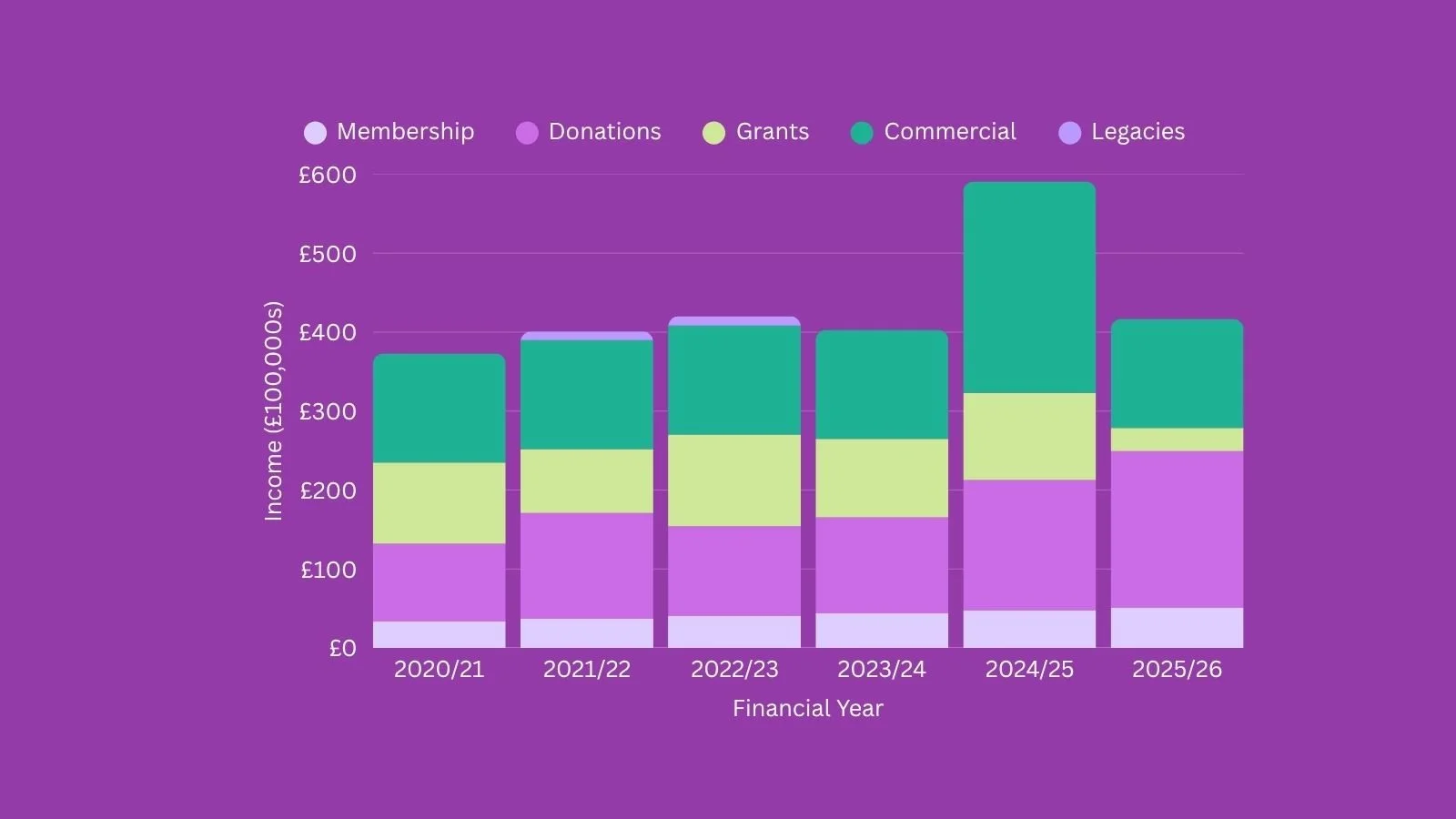
Your membership fees and donations amount to £249,235 for the year from April 2025 to March 2026, and are key to keeping us running as an independent voice for democracy.
Unlock Democracy is also supported by income from our subsidiary property company, Rodell Properties. Rodell has completed the redevelopment of a property in Central London.
Trusts and Individual Donors
We are very grateful to the trusts and grant funders who provide support for specific projects. We’d particularly like to thank the Joseph Rowntree Reform Trust for their generous support for our work.
Full Financial Report
The full, audited accounts for Unlock Democracy’s financial year 2025-26 will be available in November 2026, in an independent report by our auditors.