
Ernest Hemingway once wrote that bankruptcy happens “gradually, then suddenly.”
That’s what has happened to two-party politics.
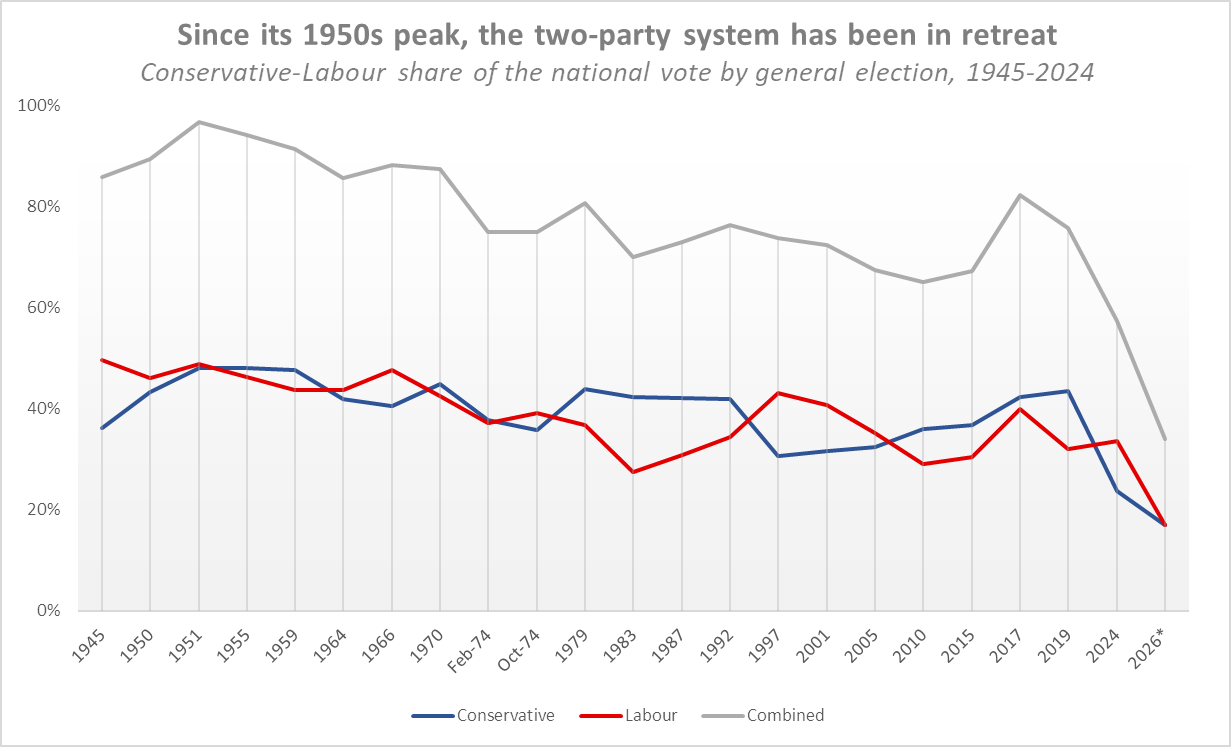
For decades, the combined vote share of Labour and the Conservatives has been drifting steadily downhill.
At this month’s local elections, it fell off a cliff. With it went the political conditions First Past the Post relies on to work properly.
“We really can now write the obituary for two-party politics.”
The chart above tells the story at a glance. Britain’s two-party order had been weakening for decades. This month, it didn’t just weaken further. It broke.
At the 2024 general election, Labour and the Conservatives together secured just 57% of the vote – a post-war low. Based on this month’s local election results, the equivalent figure at a general election would now stand at just 34%.
Here’s another way of illustrating the same point: the last time these council seats were contested, almost four in five returned a Labour or Conservative councillor. This time, that figure fell to below two in five.
Politics used to be a kind of seesaw – as one party went down, the other would go up. Now it’s as if the seesaw has snapped in two, and both sides have come crashing to earth.
‘Unprecedented’ is a term we’ve grown almost too accustomed to in recent years. One used so often as to verge on cliché. But sometimes no other word will do. This is unprecedented.
Never before have we seen five parties polling well into double digits – and according to the BBC’s nationwide projection, all within 10 points of one another.
The party-political implications of that shift are, as yet, unclear. What is clear from England’s local elections is that First Past the Post is struggling to cope with the politics of today.
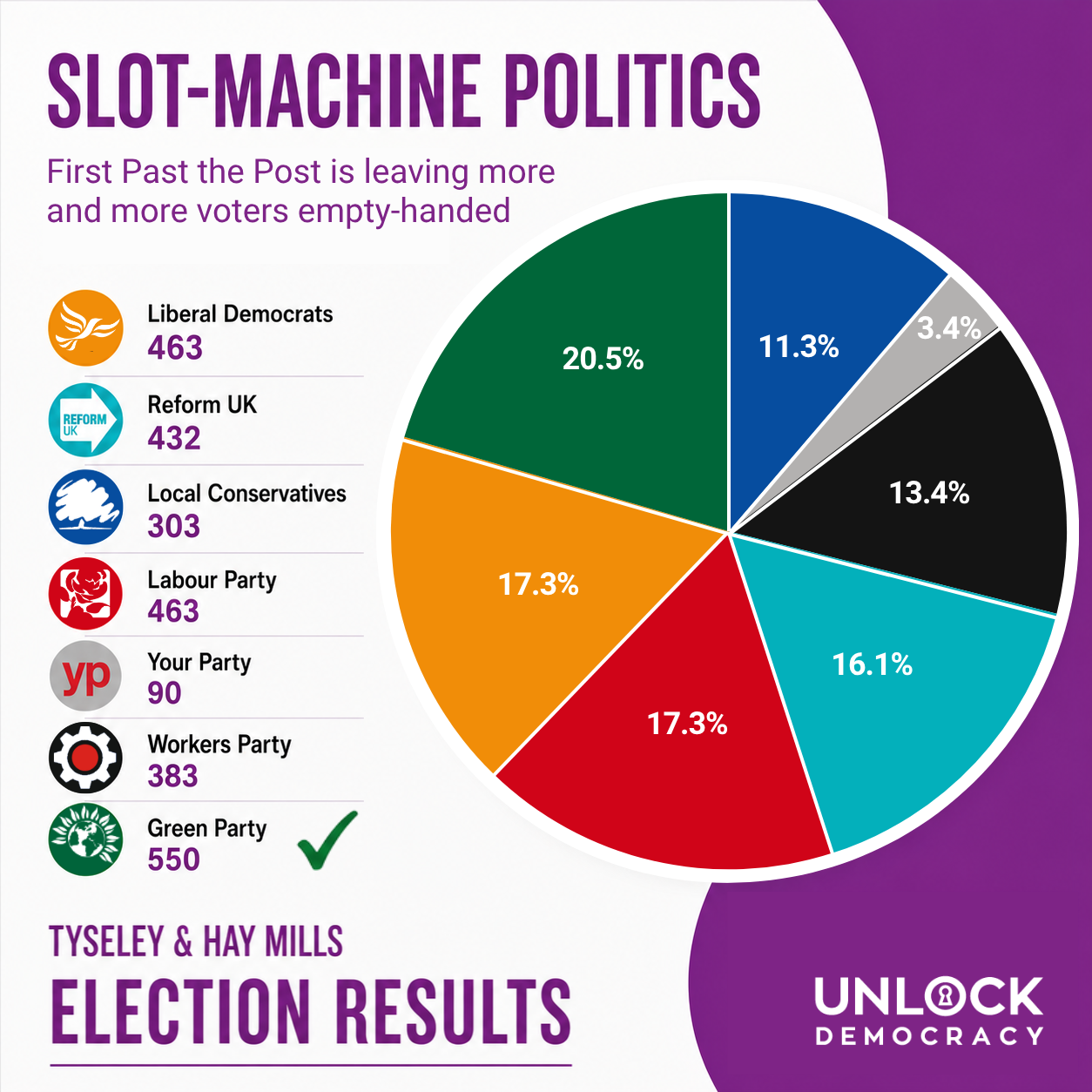
Across England, commanding council majorities were won on minority support, while substantial vote shares elsewhere translated into nothing at all. Enough votes to finish fourth in one ward were enough to win outright in another.
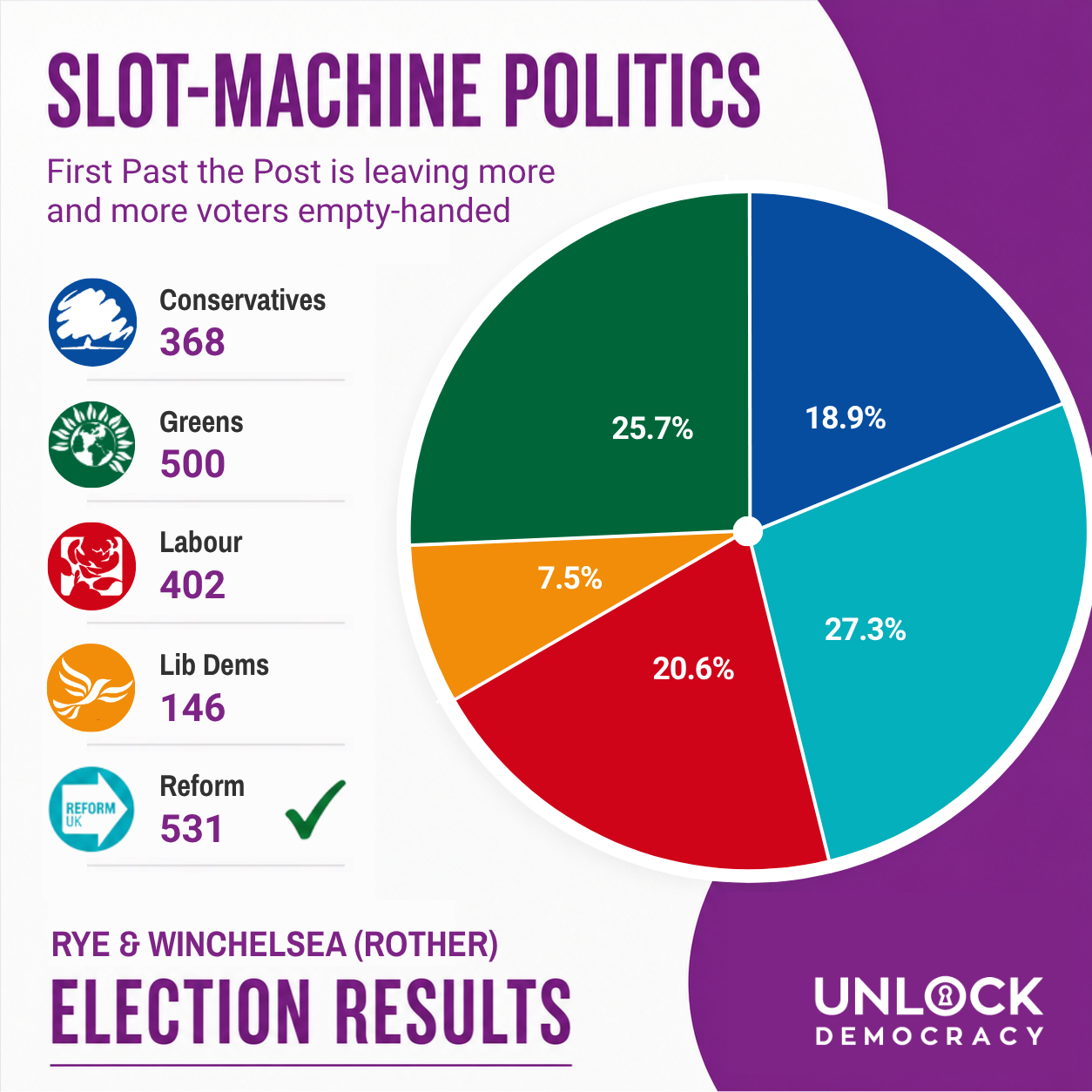
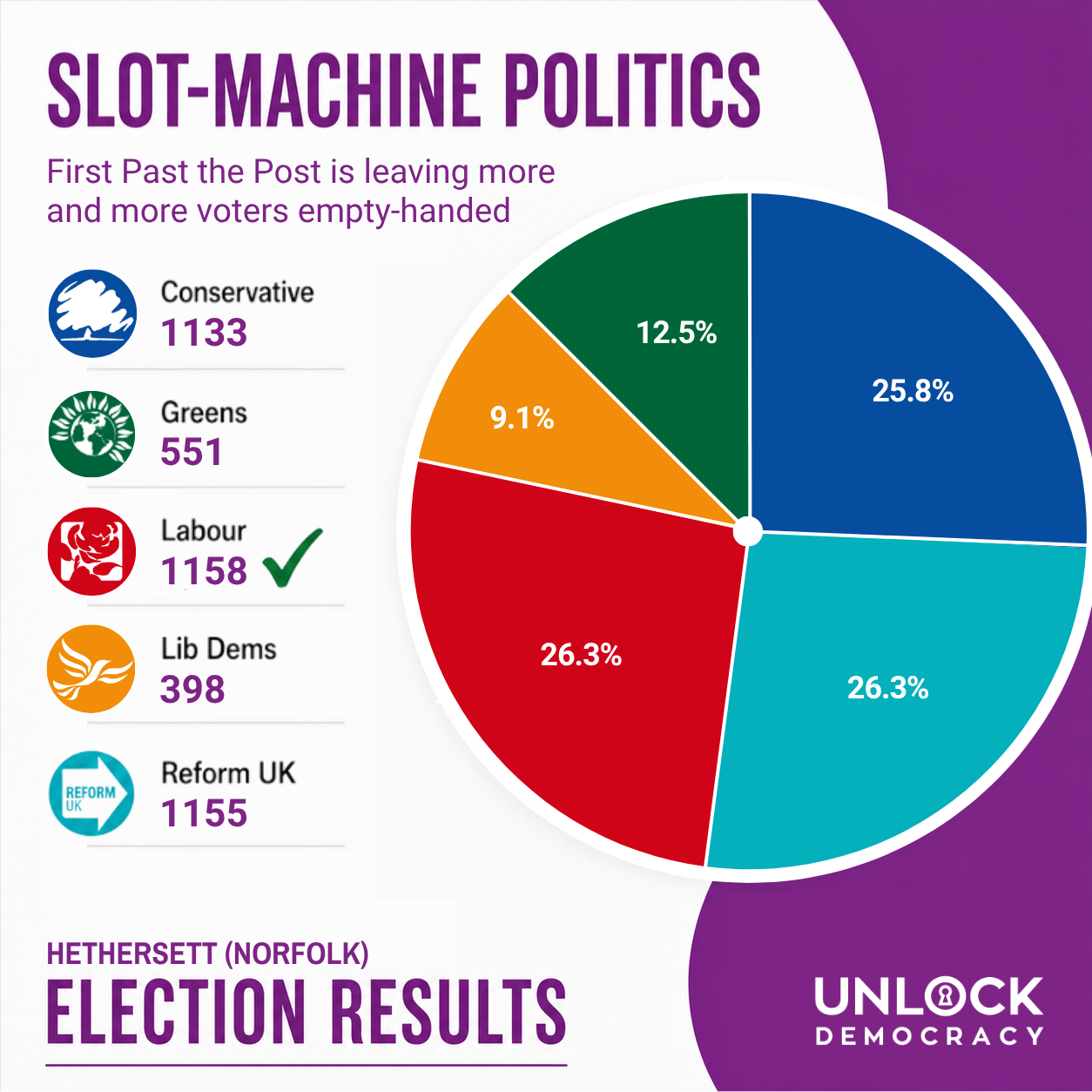
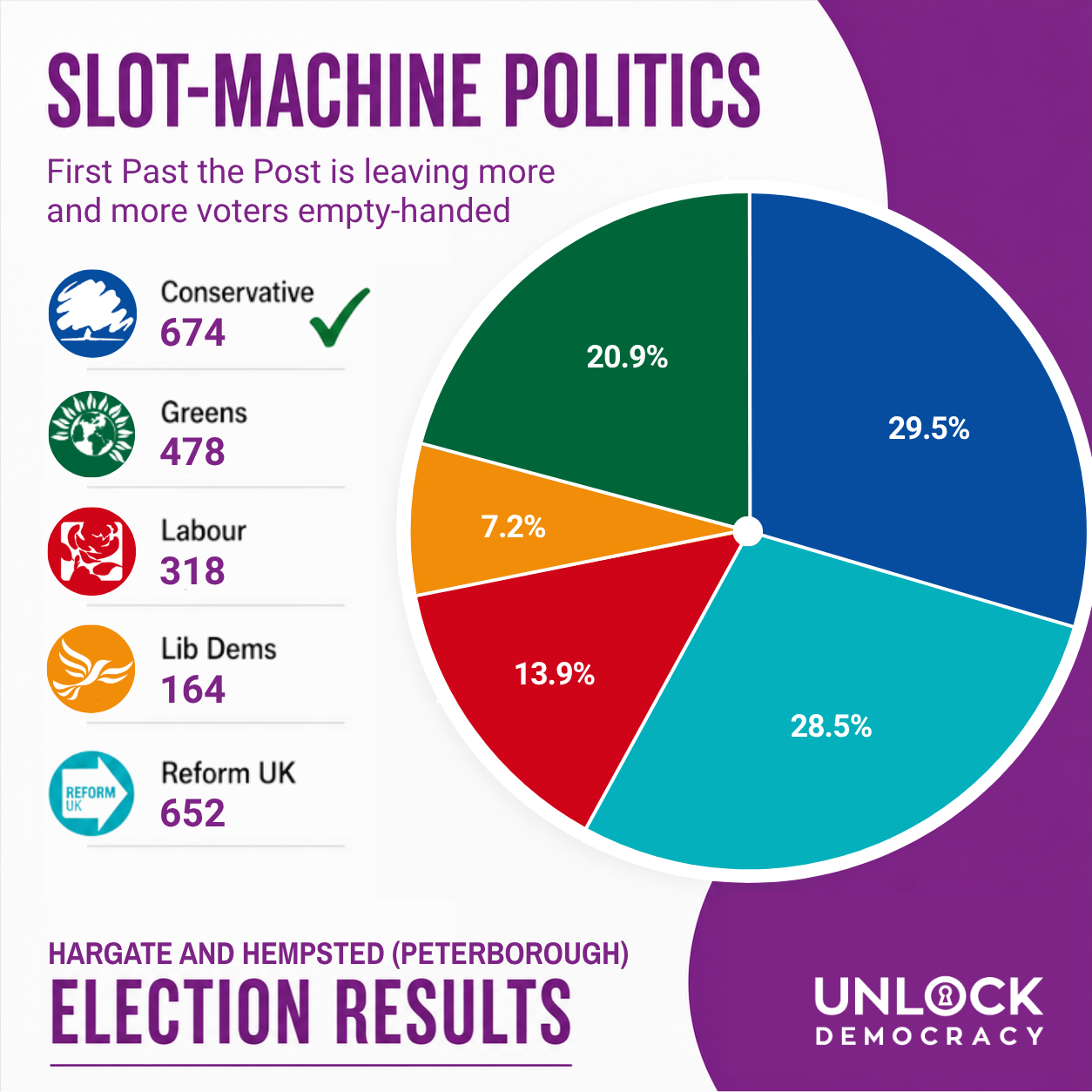
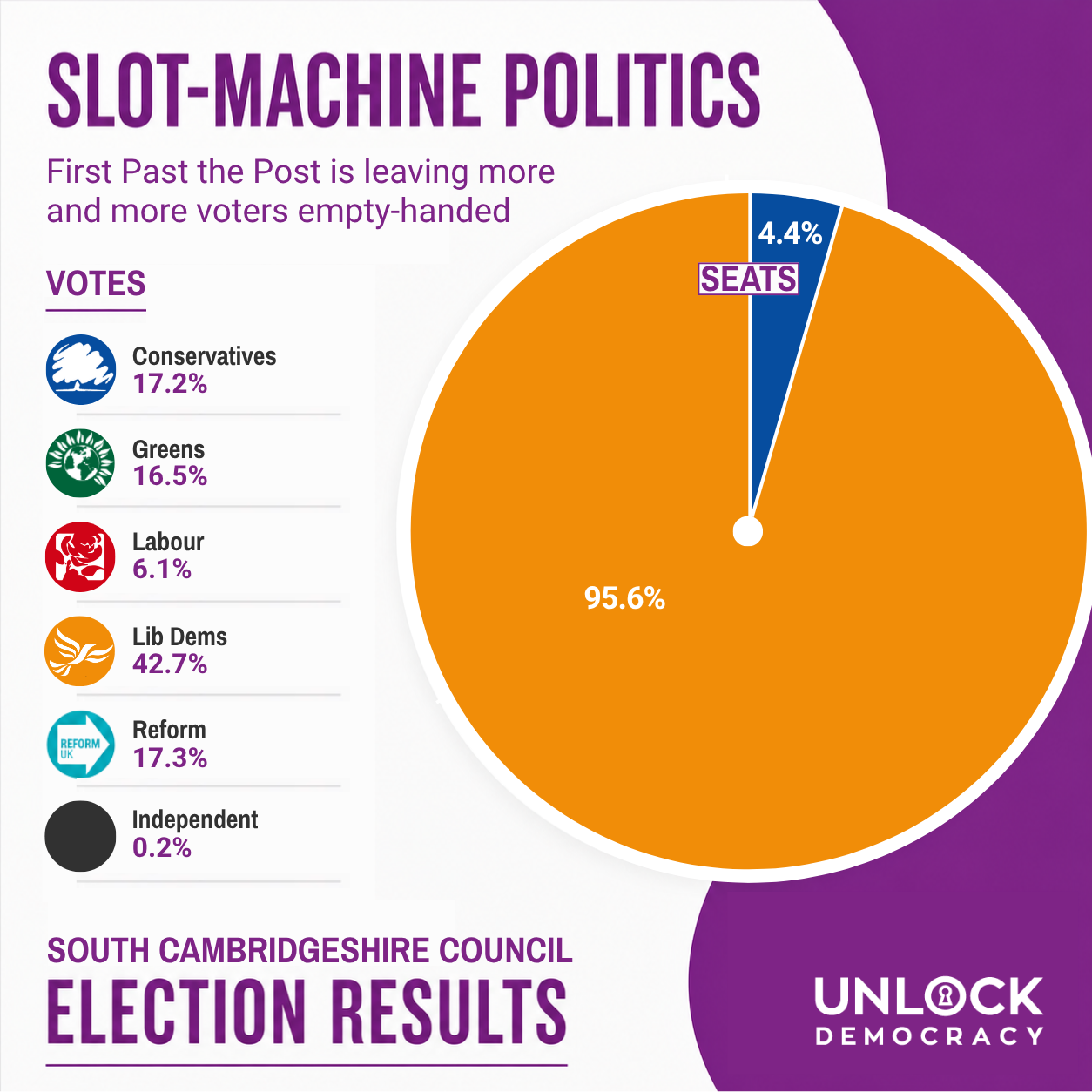
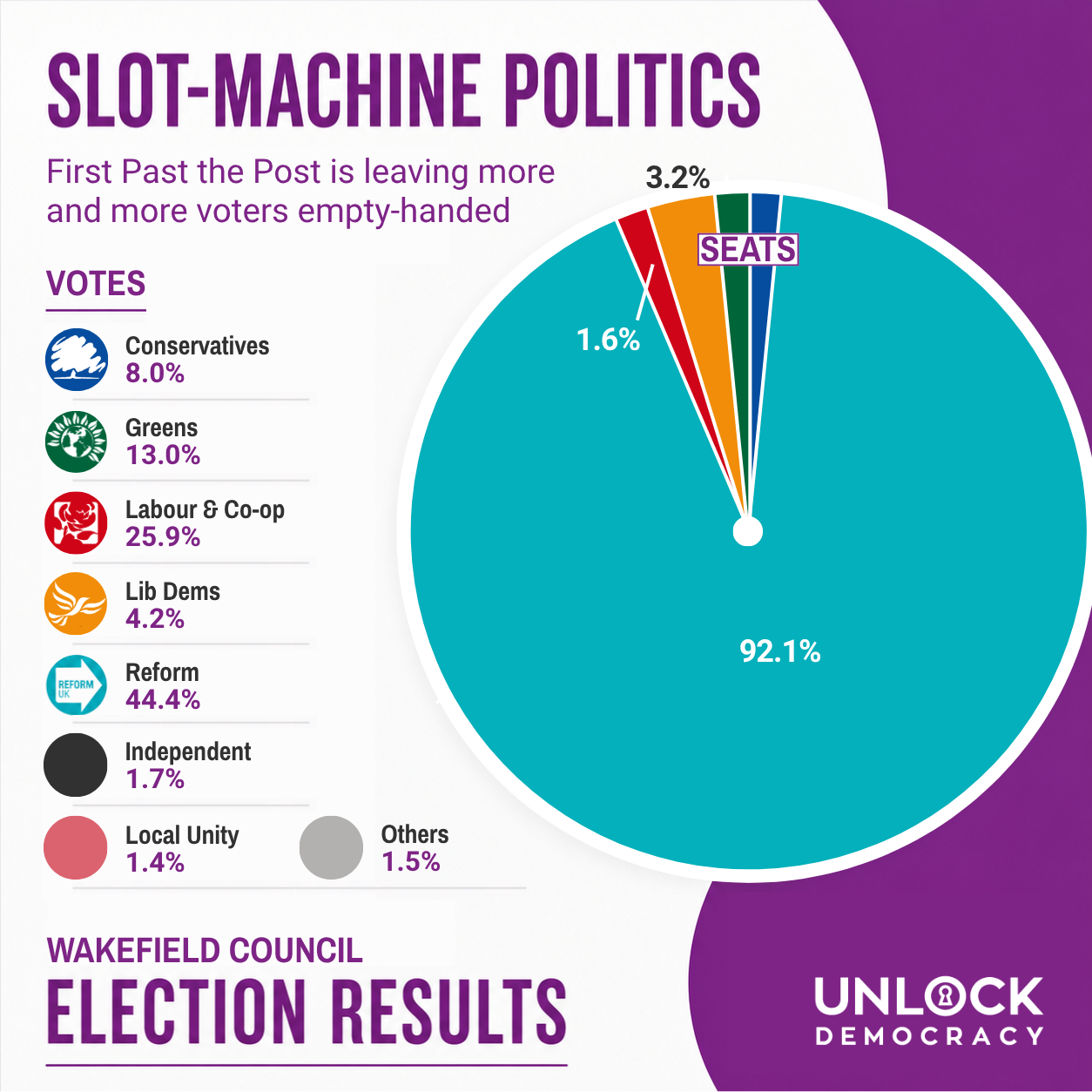
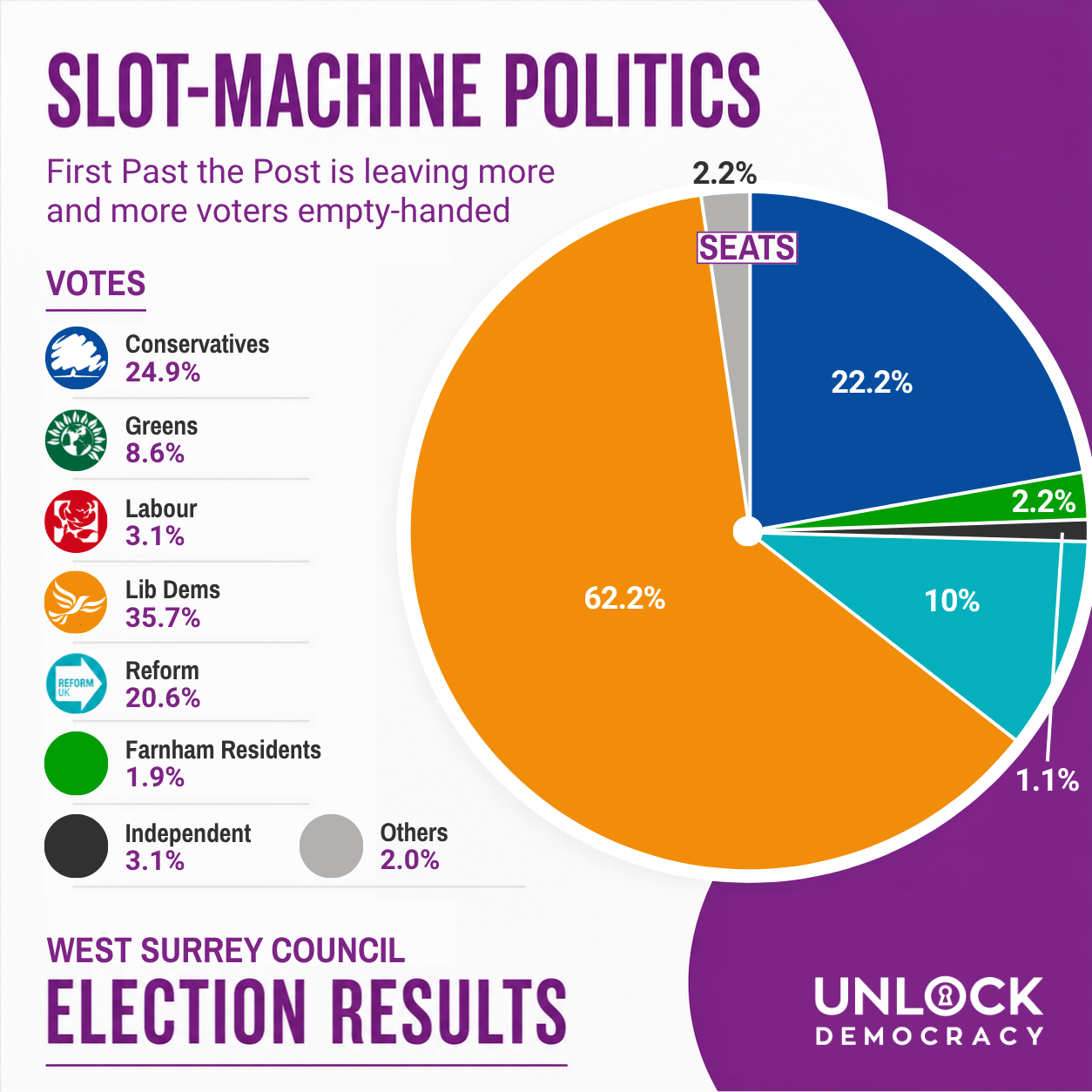
“From Wakefield to West Surrey, council after council ended up bearing little resemblance to how residents voted.”
In one Birmingham ward, where six candidates received more than 10% of the vote, the backing of just 20.5% of voters was enough to win.
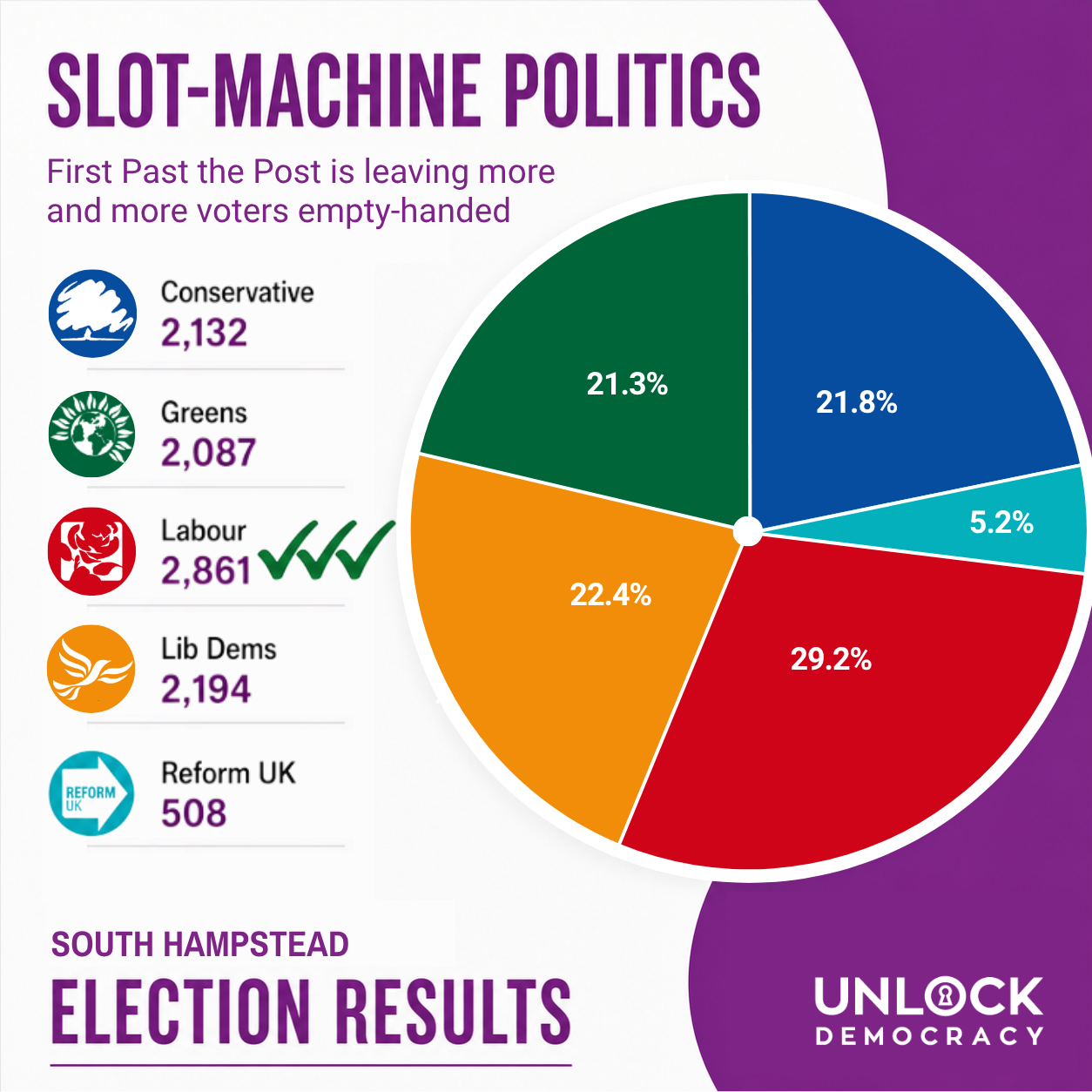
In South Hampstead, 29.2% of the vote was enough to secure 100% of the seats. Yet in nearby Belsize – under the same electoral system, on the same council, on the same day – the exact same vote share, 29.2%, left the second-placed party without a single councillor.
This bears repeating. In Birmingham, the winning line was 20.5%. In Camden, 20.5% might not even get you fourth place. Make that make sense.
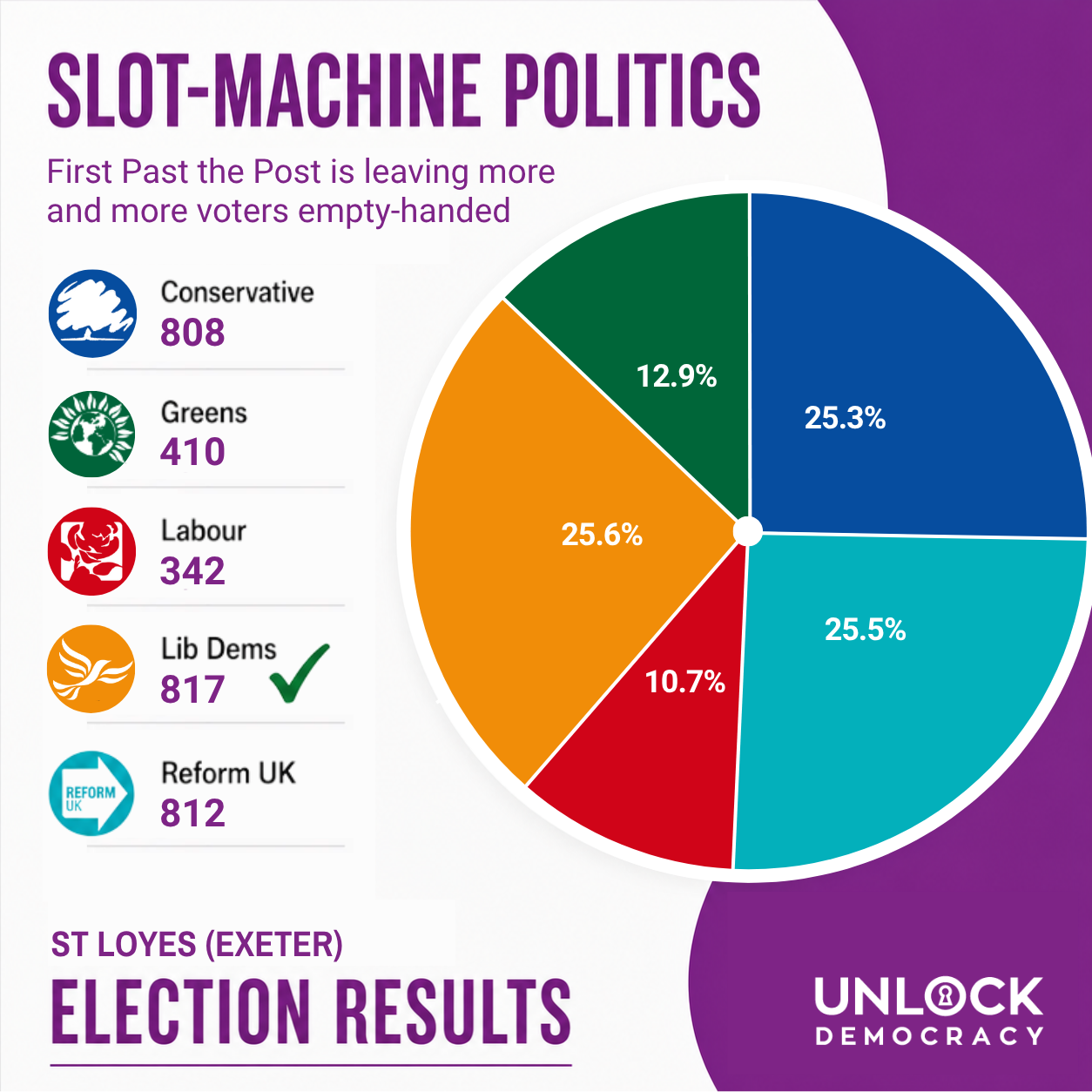
In Exeter’s St Loyes ward, three parties finished within 0.3 percentage points of one another. In Hethersett in Norfolk, victory was secured by just three votes.
This is no longer simply winner-takes-all politics. It is increasingly slot-machine politics.
From Wakefield to West Surrey, council after council ended up bearing little resemblance to how residents voted.
These are more than just routine electoral quirks. Set against the wider evidence, they look increasingly like symptoms of a voting system creaking at the seams.
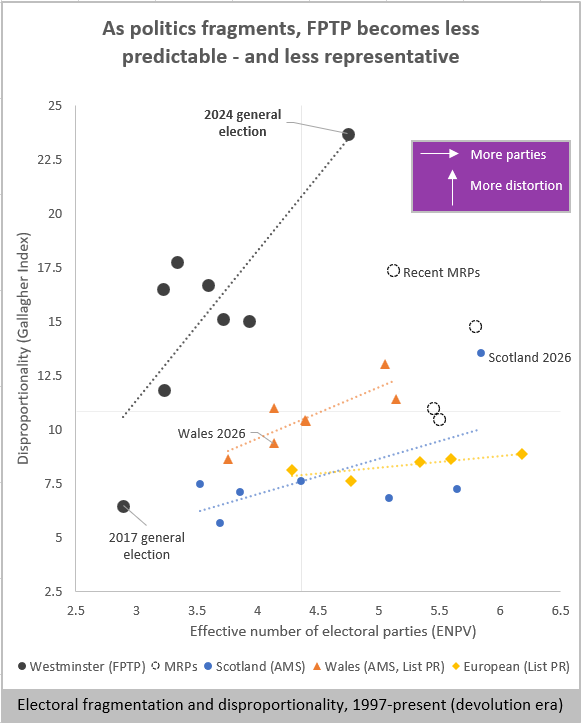
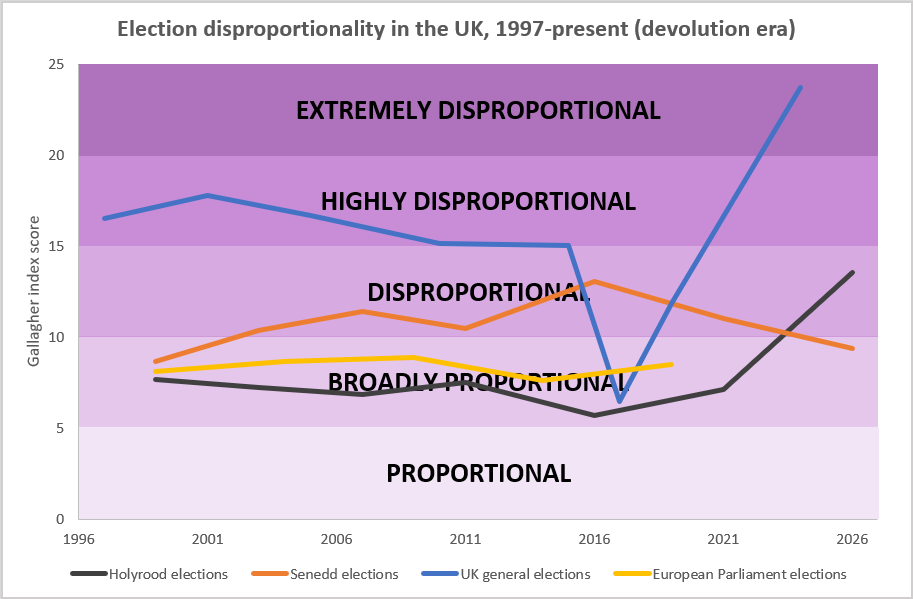
As the chart above makes clear, the higher a point sits, the further the final result has drifted from the way people actually voted. That is what the Gallagher Index measures: the gap between votes cast and seats won.
Across the last eight UK general elections, First Past the Post has produced an average Gallagher Index of 15.4 – almost double the level seen in elections to the Scottish Parliament (7.9), significantly above the Senedd (10.6), and nearly twice that of former elections to the European Parliament (8.4).
And the gap is widening. In 2024, Westminster produced a Gallagher score of 23.7 – by far the most disproportional general election in the democratic era.
That is not a coincidence. As British politics becomes more plural, First Past the Post is finding it increasingly difficult to keep votes and representation aligned.
In 1997, the effective number of parties competing for votes at Westminster – political scientists’ standard measure of party competition – stood at 3.2. By 2024, it had risen to 4.7.
Yet over the same period, the effective number of parties represented in Parliament has barely shifted – from 2.1 to 2.2.
Voters have moved on from two-party politics, but Westminster’s system of representation has not. The result is a widening gap between the choices voters are making and the Parliament those choices produce.
Our analysis of every major British election since devolution shows that while all voting systems face some increase in disproportionality as politics becomes more plural, under First Past the Post, the rise is dramatically steeper.
For every additional effective party competing for votes, disproportionality rises by almost seven Gallagher points at Westminster – roughly three times faster than in Wales, four times faster than in Scotland, and more than ten times faster than in former elections to the European Parliament.
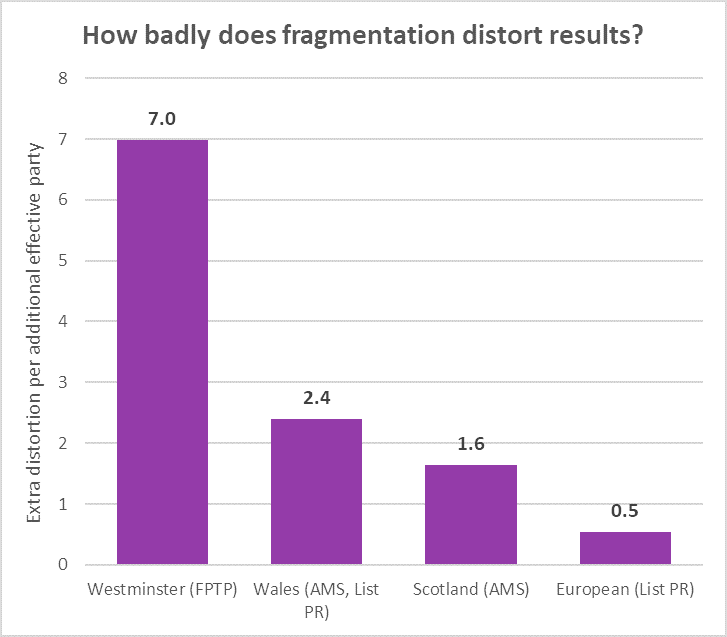
In other words, the problem is not more parties. The problem is asking a voting system built for two-party politics to cope with five.
Looking ahead to the next general election, MRP projections suggest the cost may not only be less representative outcomes, but less predictable ones, too.
Some projections point to fractured parliaments, with no party close to an overall majority. Others deliver sizeable winner’s bonuses on little more than a quarter of the vote. And those are only the central projections. The range of possible outcomes around them is wider still.
The good news is that Britain does not need to guess what a voting system built for a more plural politics might look like.
In Scotland and Wales, voters already use systems that continue to translate increasingly diverse political preferences into broadly fair representation.
Take Scotland. The Scottish National Party won 57 of the winner-takes-all constituency seats to just 16 for the other parties combined – and all despite receiving less than four in ten votes. Had those constituency contests alone determined the make-up of the Scottish Parliament, Scotland would have looked very different indeed. As it is, courtesy of the regional list vote, the SNP holds only 45% of the seats – a clear winner’s bonus, but results still recognisably tethered to the way Scots actually voted.
In Wales, Plaid Cymru also secured a modest winner’s bonus – winning 45% of the seats on 35% of the vote – but nothing remotely on the scale of 2024, when Labour turned a smaller vote share into two-thirds of the seats at Westminster.
These systems are not perfect. But they are far better suited to today’s multi-party reality.
Britain’s politics has changed. This May’s elections showed that beyond doubt.
Voters have moved on. The question now is whether Westminster is prepared to catch up.